
Talk // I
A king anxiously paces in circles around his throne room until his advisor momentarily stops him, suggesting he take a seat and try to calm down. The king hesitates, yet reluctantly sits on his throne as he looks over his shoulder; left, then right, only to immediately continue his nervous stride. A man dashes down the staircase behind the throne, congratulating the king on becoming a father.
Overjoyed, the king sprints to his wife’s side, noting the healthy cries of their lively baby boy. The name he suggests is well received by the queen, but she chooses another instead. Without any protest, the king obliges and lifts his son. Then, a cough. And another. The king turns to his wife, newborn cradled between his arms, and asks her what’s wrong. Fade to black.
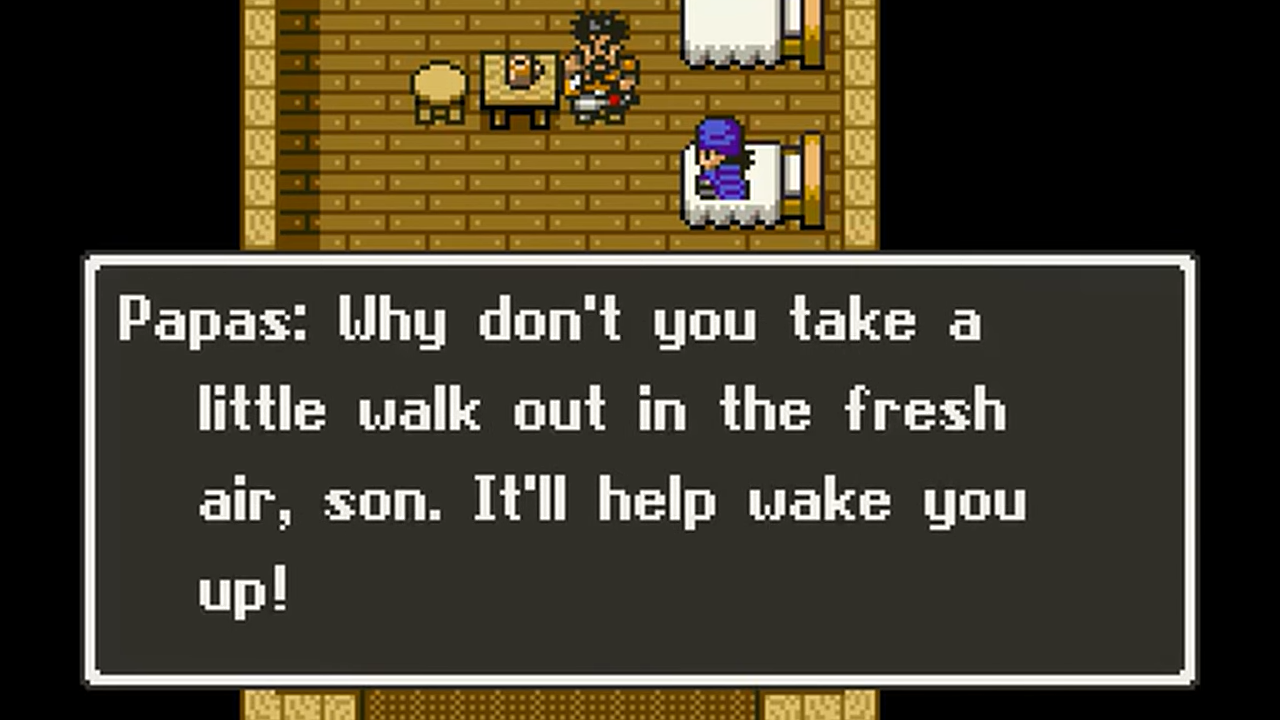
Awoken by the subtle smell of sea salt and the gentle sways of a galleon, a young boy sits up in his bed as his father stands from a nearby table. The young boy recalls an eerie dream, one in which he was a baby in a castle; a dream his father jokingly and easily dismisses. The boy is told to make his way topside to greet the morning’s fresh breeze. Sunshine warms the boy’s body, finding its way beneath his purple-hued turban and flowy cloak, as he basks in another new day.
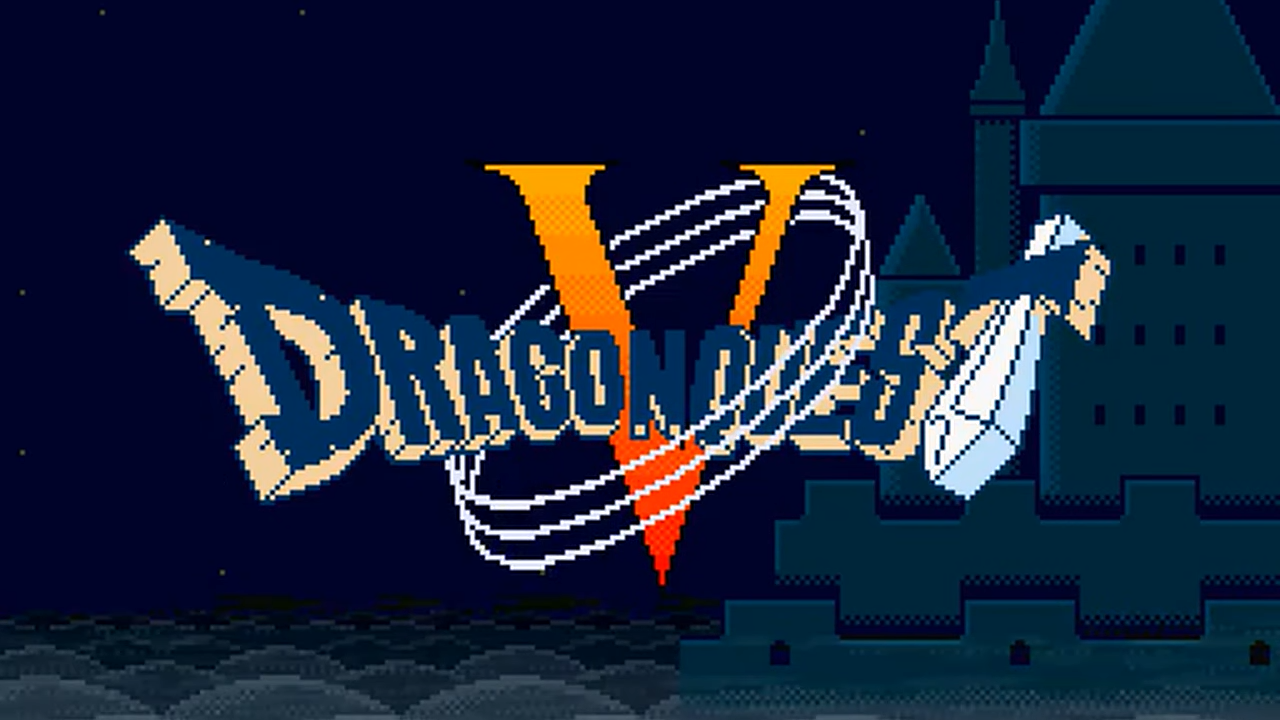
Dragon Quest V: Hand of the Heavenly Bride was originally released on the Super Famicom in Japan on September 27, ’92, and was developed by Chunsoft and published by Enix. It was later remade for a Japan-exclusive PlayStation 2 version in ’04. North American and European consumers wouldn’t be able to play one of the most influential games of all time until it was remade for the Nintendo DS, released in Japan in ’08 and worldwide in ’09, marking the first and only time the game had been officially released in English.
From monsters befriended in the wild (yes, DQV pioneered “monster collecting” a whole four years before Pokémon‘s release in ’96) to the hero’s wife and children, this coming-of-age tale spans nearly 30 years of the protagonist’s life as he travels the world to find his missing mother. Through decades of love and loss, one toiling midnight decision, and an oddly mature yet whimsical story, DQV continues to hold players’ hearts and never lets go.
We’ll come back to Dragon Quest in a bit.
Magic // II
I grew up a Nintendo kid, like many other suburban kids born in the mid-’90s. In ’92, my parents, long before I was even a thought, spent many a late night trying to 1-up each other in Tetris on the NES. There’s a photo stuck in a dusty stack somewhere in my Mom’s bedroom of my little brother and me playing Pokémon Stadium 2, with the quintessential second, unplugged controller.
If, for whatever reason, I didn’t have a controller in MY hand, I was wildly clicking and clacking away on the family computer in our living room. On the fridge was a printed diploma signed by both my Mom and, yes, you better believe it, Master Yoda, congratulating me on reading my first few words from Star Wars: Yoda’s Challenge Activity Center. An unfathomable number of Sims died at my friends’ and my hands, on purpose and not. I trash-talked in pubs (public lobbies), sitting on my cousin’s lap playing Counter-Strike 1.6, wallbanging (a Hail Mary-esque shot through a wall and getting a kill) grown men as they shouted the most heinous profanities that I still use to this day.
I’ll never forget the feeling of ripping Final Fantasy: Crystal Chronicles’s shrink wrap piece by never-ending piece in the back of my Dad’s car after school. I remember thinking, “wow, y’know, I should really break up with my girlfriend,” while blasting away at a giant radioactive cockroach with a saw-off shotgun as I listened to Skeeter Davis’s The End of the World the night my college roommate drove me to and from the Fallout 4 midnight release (I was really lucky he wanted McDonald’s). I’ll admit to crying a bit at the 2-and-a-half-hour cutscene marathon that is the ending of Death Stranding as my dog Clancy licked my salt-flowing face.
Life, and subsequently art, don’t mean much to me unless there’s someone else around to experience it.
For Christmas ’25, my brother asked me to get him a retro handheld, something he could play DS games on during his work break. I’d spent hours combing the internet; reviews, videos, whatever. I stumbled across the TrimUI Smart Brick, but tabled it because it didn’t quite meet his personal expectations. After more hours of reformatting SD cards to FAT32, downloading emulators and ROM collections, and fucking up one custom operating system after another, I figured I should get one too.
Items // III
About a week after New Year’s Day ’26, I found the Brick in my mailroom and spent the rest of the day setting everything up. The next day, my Mom called and told me that our dog, Clancy, who was 15 years old at the time, had collapsed earlier in the day and hadn’t gotten back up. I was on the next train to my parents’ house and spent the next few days with them. That first night, I booted up Pokémon SoulSilver as he lay with me on my bed, retreating back to a world I’d often escape to as a kid.
Though I was lucky enough to have grown up with the Pokémon Yellow edition of the Game Boy Color, Pokémon Silver is the one I remember playing first. After hearing “no” to a dog about a million and a half times, I instead always imagined myself as the trainer, my Pokémon loyally following behind like any other movie-depicted “boy and his dog.”
Pokémon don’t die, they faint. They never get arthritis or hemangiosarcoma. If anything happens to them, you’re greeted by the same pretty face and familiar jingle (it played in your head just now, didn’t it?) as the Pokémon Center in the next town over. You can say “goodbye” to them, but you’re only releasing them back into the wild, all without a vet house call to pick a date and time, and most people don’t even get that.
For what simultaneously felt like both nostalgic, childlike comfort and subtle self-sabotage, I found myself living only for every new companion, every rival battle, every near-win and near-loss.
Johto, Sinnoh, Unova—I wanted to be anywhere but alone.
Eventually, I realized, at least in that moment, Pokémon was unfortunately hurting more than it was comforting. Like most other 30-something-year-olds after losing a pet, I turned to Final Fantasy instead. Over the next few months, I played Final Fantasy III, then IV, VI, VII, IX, I, II, and then V. Yeah, I skipped VIII, shit on me all you want, at least I finished II (and it fuckin’ suuucked).
I admired Cecil’s resolve to become a better, stronger person; the entire ensamble cast of VI‘s individual reasons for continuing to live on after a world-shattering, apocolyptic event (I especially admired Mog’s dancing); Cloud’s ability to turn his vulnerability into strength; Vivi’s radical acceptance and understanding of Death, with his ending monologue being something I look back on more often than I’d care to admit. Each game (well, almost; definitely not II) had something to say, and I listened. But this essay isn’t about Final Fantasy; it’s about Dragon Quest.
I’d played Dragon Quest XI S: Echoes of an Elusive Age – Definitive Edition when it released on the Nintendo Switch in ’19. Okay, actually, I really only played about a third of it. I wouldn’t finish it until years later on the PC. Regardless, my experience with the Dragon Quest games is fairly limited, but I knew I wanted to play more heartfelt games, and especially ones that I knew had stood the test of time. I figured it was about time I played Dragon Quest V.
Examine // IV
This is your official spoiler warning; if you haven’t already played Dragon Quest V or seen Dragon Quest: Your Story, please do yourself a favor and do so. I promise, unless you’ve a sad, sorry, little heart filled with lead, you’ll have a good time.
At first, I found DQV very charming. It was cute that your character, aged six in the first act of the game, wasn’t able to read any books or post signs, which is like, uh, very important in almost any video game. You kinda need to know what’s what and where (I guess he didn’t learn how to read from Master Yoda). When the ship you start the game on, owned by the illustrious Rodrigo Briscoletti, pulls into port, your father, Pankraz, instructs you to wander around until he’s finished with his business. After talking to everyone in town and breaking every barrel and clay pot, like any young kid, you, well, wander off.
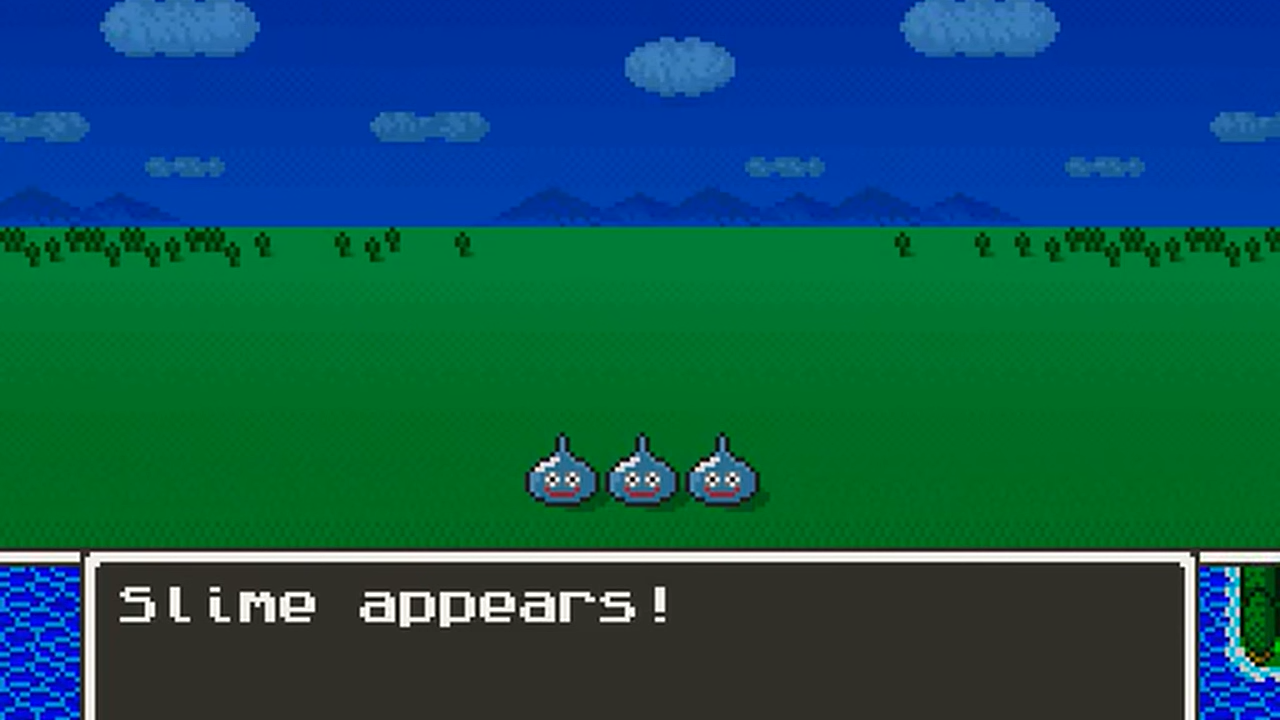
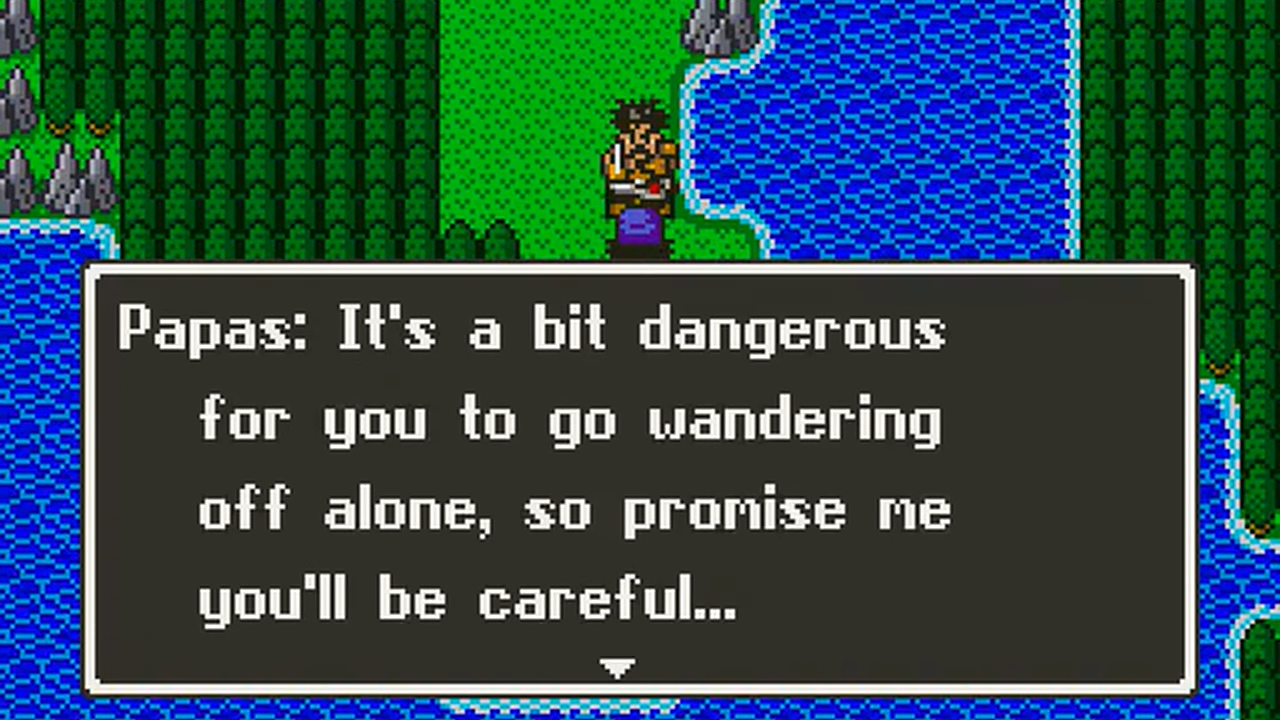
You enter the world map, an entire planet to explore. You take a couple of steps and—ah shit, battle music. Where Professor Oak would have an actual stroke, Pankraz steps in to help you fight your first few slimes. He’s like, level 27, and kills everything in one hit, and after every battle, he heals you; right now, Pankraz is powerleveling your smurf-ass and treats you like you’d treat any of your typical JRPG party members.
From there, the game and Pankraz hold your hand as they direct you from town to town. Eventually, you meet Sancho, your father’s friend, and another young girl, Bianca. You follow your father into a cave and save a local merchant. You and Bianca lift the curse of a nearby castle to save a small sabrecat being bullied in town. You travel to the land of the faeries and defeat the Ice Queen. You travel to the kingdom of Coberg and meet Prince Harry.
While in Coberg, you and Pankraz are tasked with being Prince Harry’s bodyguard, and, I’m not joking, moments later, the little bastard gets kidnapped. Nice going, Pankraz, you had one fuckin’ job. At this point, you have some experience under your belt, so you take matters into your own hands and chase after him. You meet up with Pankraz, who followed after you, and he tells you to run off with Prince Harry when the two of you find him in a dungeon nearby. As the cave exit comes into sight, you enter a battle with the last monster standing in your way, only…your party gets completely wiped.
Then the game transitions into the battle screen as you watch Pankraz singlehandedly bust the balls off what seems like two bosses at the same time. The guy’s insane!
Wait, this scary lookin’ Bishop Ladja dude’s got a scythe to your throat. Shit.
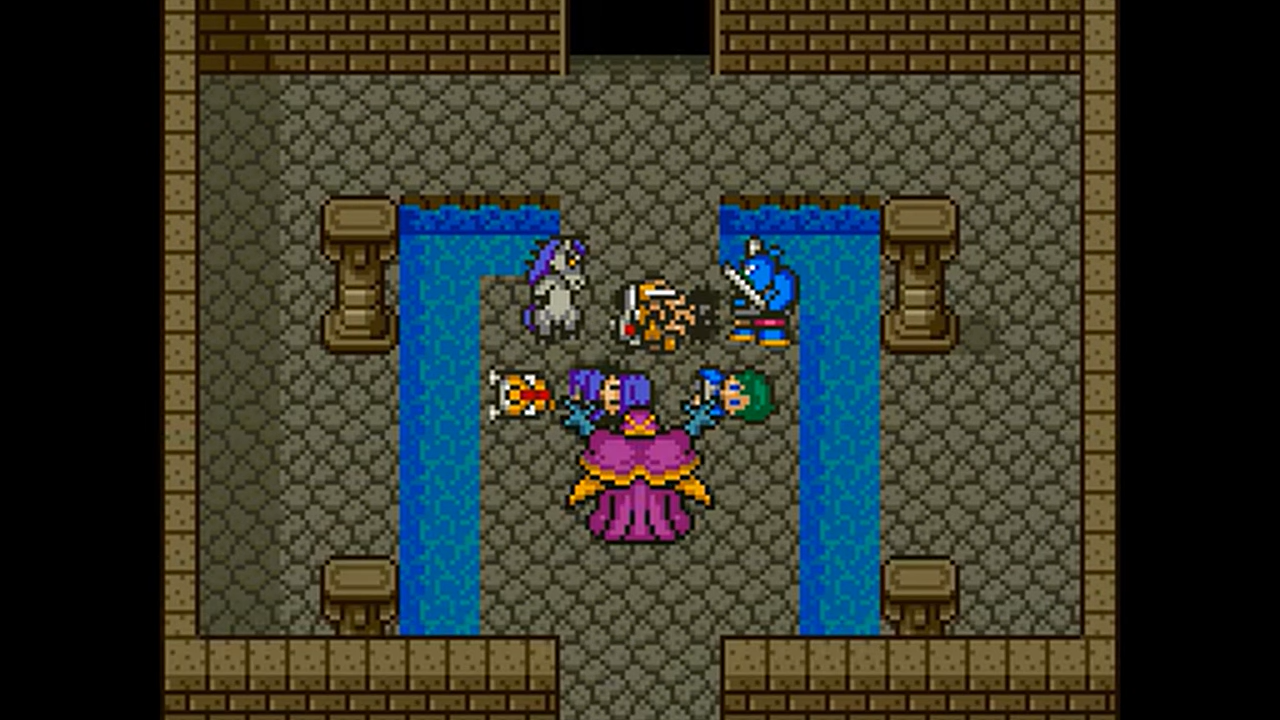
In one of the most gripping scenes I’ve experienced in a video game, you’re put in that same battle screen with Pankraz and the two bosses. Slon the Rook attacks. Pankraz takes 21 points of damage. Pankraz stoically endures the assault. Kon the Knight attacks. Pankraz takes 19 points of damage. Pankraz stoically endures the assault. You’re stuck in the driver’s seat, watching Pankraz take blow after blow, his HP bar growing smaller and smaller. Only minutes ago, you saw him take on both of them with ease, and now it’s taking them what feels like hours just to whittle him down.
“Your mother…She’s…still alive…Keep…keep looking for…your mo—” Ladja hurls a giant fireball towards Pankraz, and he’s gone and like, actually disintegrated. There’s nothing left; an outline of soot and ash left on the cold, hard ground. You and Prince Harry are enslaved, and your loyal sabrecat is left to fend for itself.
The Death of Aerith in Final Fantasy VII wouldn’t happen until five years later in ’97. I don’t think I really need to explain the emotional, mechanical, and cultural significance of one of the most, if not the most, tragic Deaths in all of fiction. Though not NEARLY as impactful because of the role and time spent with Aerith, helplessly watching Pankraz take blow after blow from monsters he could demolish with his hands behind his back still hurt.
I think you lose a piece of yourself when you watch someone you love die. One day, they’re there, walking around like nothing’s wrong. The next, they’re not, and you’re left wondering what more you could’ve done. Sudden, or drawn out, it hurts all the same. If it’s someone you’ve learned to rely on, you have to relearn another way just to get through each hour, day by every ache-filled day.
By the end of DQV‘s first act, I was hooked. For me, the difference between unadulterated entertainment and art is found in emotion.
Attributes // V
You and Prince Harry escape from slavery after 10 years and continue your and your father’s quest to find your mother. You return to your hometown—razed to the ground, and no sign of Sancho or Bianca. You find your father’s old journal and the legendary Zenethian Sword in the cave you explored at the beginning of the game, absolutely destroying everything in your path on your way there, indicating how much you’ve grown. Pankraz details how he thought you were the legendary hero, destined to wield the Zenethian Sword and Armor. Only, you can’t wield the sword…so you’re clearly not the legendary hero. Well, that kinda sucks. Time to go find out who is, I guess.
Unlike MOST other party-based JRPGs of the time, you start completely alone, which is where the monster collecting comes into play—after every battle, there’s a percent chance that whatever monster you beat will ask to join your party. I grew rather attached to Gootrude the slime and Goodrian the slime knight (they came with those names, I swear). After traveling through a few towns, you also run into your old sabrecat, who instantly recognizes you and rejoins your party. Eventually, you hear a rumor that the Zenethian Shield is being kept in the town of Mostroferrato, where Rodrigo Briscoletti and his two daughters live.
You make your way to Mostroferrato and bump into Nera, one of the girls you met on Briscoletti’s boat. In the DS version, you also meet Debora. She’s, well, a character, but we’re just gonna pretend she doesn’t exist. Briscoletti challenges all who wish to wed his daughter, Nera, to obtain two rings scattered across the world. While passing through a nearby town, you meet up with Bianca. Her father, sick and not sure he has much time left, asks you to take Bianca with you and look after her. She joins your party, and the two of you reminisce on your time as children at Uptaten Towers as you fight side-by-side to find the rings.
Returning the two rings to Briscoletti, you’re implored to take Nera’s hand in marriage. Bianca’s happy for you, but you can tell she’s hiding something. The beyond-emotionally intelligent Nera also catches wind of Bianca’s hidden feelings, and isn’t exactly in any rush to get married to you either. Also, uh, Debora chimes in and is a choice, but we’re ignoring her. You’re told to decide before the following day.
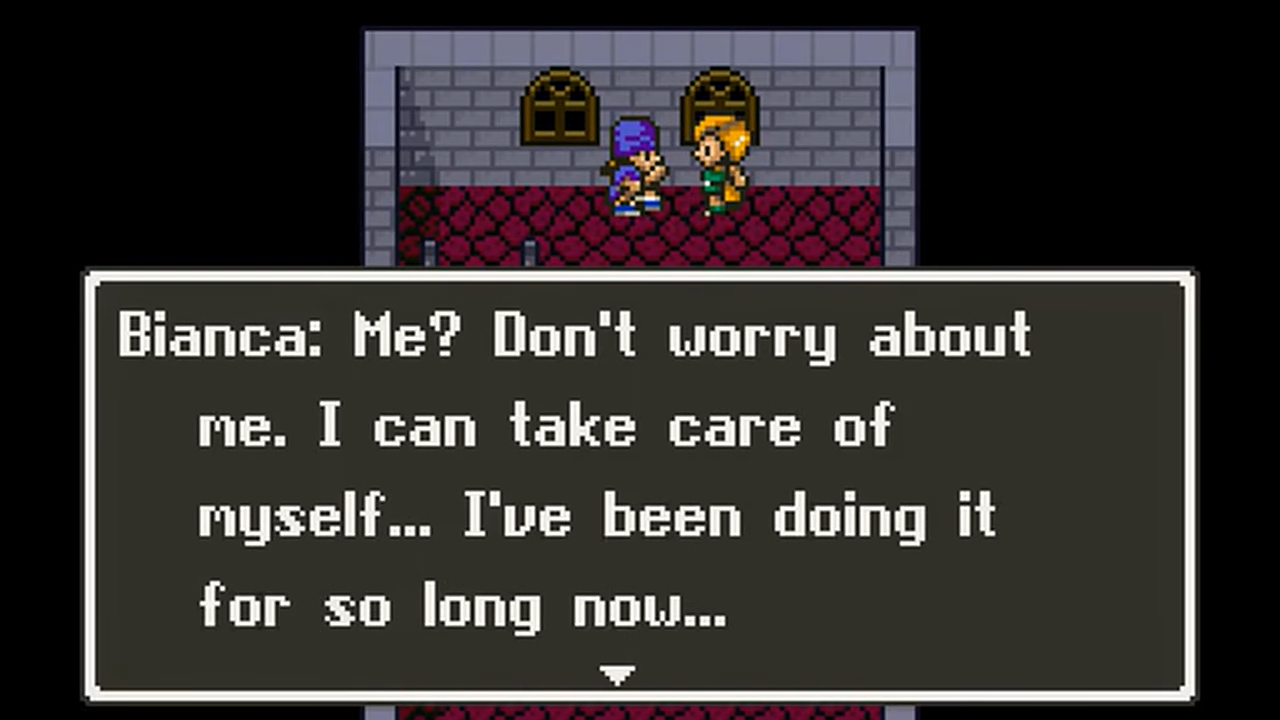
Unable to sleep, you wake in the middle of the night and take a walk to clear your head—whispers among the townfolk travel fast, with everyone having their own opinion on the better choice. Bianca is found in Briscoletti’s second villa, also unable to sleep and staring longingly out to the moonlit sky; Nera, on the other hand, is fast asleep in her bed, snoozing blissfully as if it were any other night. Morning comes, and so does your inevitable decision. Who do you pick?
I admit I’m not exactly the best with relationships. In the first few weeks of college, I became friends with a girl and, over time, grew interested in her. At the time, I wasn’t sure if she felt the same way, but I appreciated being her friend nonetheless. Eventually, I met another girl from another school who was openly interested in me. In a moment I’m not exactly proud of, I pulled a Ted Mosby (IYKYK) and got a yellow-ruled notepad to make a list of pros and cons. I had each of my roommates vote. My friend won. I told her how I felt, and she said she’d like to stay friends. I ended up dating the other girl, but my friend later admitted to having feelings for me and regretted not saying anything.
Nearly 10 years later, I stared out a similar window during a moonlit night, pulled out a similar-looking yellow Post-it note, and drew up yet another list of pros and cons. I even polled a friend of mine. I couldn’t help but scour the internet for everyone else’s picks. Bianca, the childhood best friend, had a mix of both physical and magical stats, being the more balanced option. Nera, the rich beauty you’d essentially just met, is a pure mage focused on healing. Goodrian (not a marriage choice) was already a healing powerhouse, and I figured I needed some flexibility in my party. The late Akira Toriyama’s official artwork for the game featured two kids with golden hair; one of them could be nearly mistaken for Super Saiyan Gohan—the obvious canon choice. Bianca’s father’s plea to look after his daughter is one of the few JRPG text boxes seared into the back of my mind (right up there with the classic “This guy are sick.”). I picked Bianca.
“Next time, I’ll pick Nera,” I said to myself, not even remotely sure when “next time” would be.
The two of you, along with your monster companions, travel to Gotha, the kingdom your parents ruled over. Something I didn’t mention before, but Dragon Quest V has a day/night cycle—you and Bianca end up traveling for, well, days, maybe “months,” if you push your imagination a bit. After however long, passing through a snowy town, Bianca falls ill for a moment, and you sit by her side as she recovers in a nearby inn. The two of you make your way to Gotha, greeted by Sancho with equal parts smiles and tears, but Bianca falls again. She’s…pregnant!?
The reigning king of Gotha, your uncle, who definitely does not want to be king anymore and is beyond ecstatic you’re back, bestows your birthright to you after a quick, seemingly inconsequential fetch quest. You return to the throne and to two beautiful newborn children. Everything feels, well, right—almost too good to be true. From an orphaned slave to a kingly father, pacing around the same room Pankraz had all those years ago, you take it all in. The curtains close. The credits roll.
Just kidding, Bianca totally gets kidnapped by flying monsters. You rush through yet another dungeon to save her, until you come across Bishop Ladja once more. In yet another gut-punch of a closing scene, Ladja turns you and Bianca to stone, and treasure hunters hurl your lifeless bodies elsewhere, your children left to their lonesome.
Misc. // VI
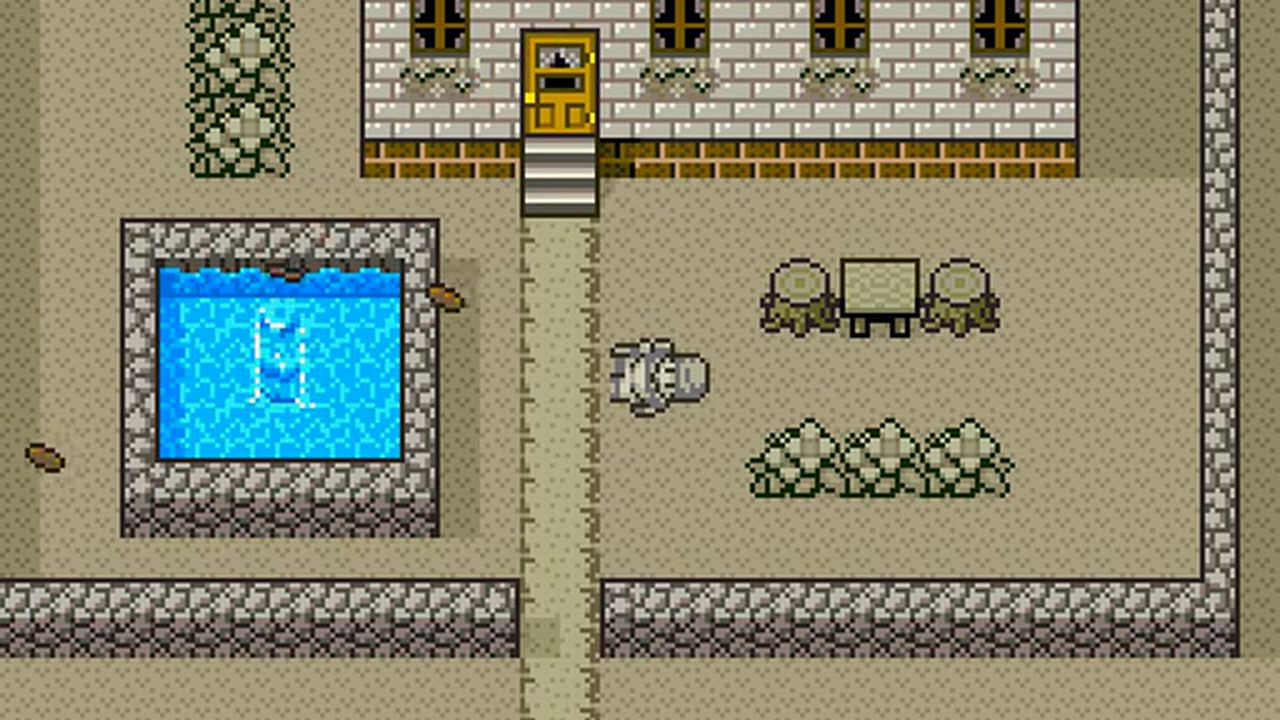
The two of you are sold off at an auction house. You’re placed in front of a noble’s home, as you’re left to watch his newborn son grow up over the years instead of your own. One night, the noble’s son is kidnapped, and his wife is left for dead in the yard. Beyond furious at his own helplessness, he takes his anger out on you, as you fall to your side, continuously watching the leaves and snow fall, the flowers bloom, and the sun shine.
One fateful day, a whopping 8 years later, Sancho and two blonde-haired children find you and use a staff to undo your curse. It’s your children, and your son wields the Zenethian Sword—he’s the legendary hero! The two of them join your party, with your son acting as a physical damage dealer and your daughter a powerful mage. Just like the beginning of the game, you’re about level 27 at this point, and your kids both start at level 1. You start by destroying low-level monsters and healing them after every battle. They follow right behind you, like you did with Pankraz, to find your missing wife. The student has now become the master.
You never really become Aerith in the same way you follow in Pankraz’s shoes. You keep her legacy alive in other ways, sure, but it’s hard not to look back at those first few hours with your children in your party and wonder where you’ve seen this all before.
After loss, we might not have the things we once relied on, but, under the right circumstances, we become someone others can rely on instead. There’s some beauty in that, I think.
After helping a dragon god (hilariously named Dr. Agon) by going back in time to talk to your younger self—y’know, typical stuff—you find Bianca and undo her curse. Now with a full party, you head off to the final dungeon. At the summit of Mt. Zugzwang, you finally meet your mother; she’s been in a sort of stasis all this time, holding Ladja back from opening a portal to the Underworld and releasing Grandmaster Nimzo. Her stasis breaks, and you hold her in your arms during her final moments, telling you how proud of you she is. Ladja takes one last piece of you.
You absolutely rock Ladja’s ass (or struggle if you didn’t grind at all), and send Nimzo packing back to the Underworld. The world is finally at peace. But I mean, c’mon, there’s all this post-game content, so you keep playing, and the game never ends, and wait, what do you mean I have to wake up tomorrow morning and go to work, what the fu—
Fin // VII
In 2019, Dragon Quest: Your Story made its way to theaters around the world, loosely adapting the story of Dragon Quest V. The overall plot points remain the same, iconic tracks play throughout, and tiny Easter eggs are plentiful for veterans of the series. There’s a catch, though—after defeating Ladja, Luca, the protagonist, is told he’s actually playing a VR version of DQV, and that none of what he’d experienced was real. He’s confronted by a master program that deletes everything, leaving him alone in an endless white room. The entity explains that a master hacker created it to mess with players like Luca, with the message “grow up, loser.”
In a scene that hit very close to home, Luca flashes back to moments as a child: the joy on his face when he received Dragon Quest V, and the sense of accomplishment of finishing it for the first time. He exclaims that the characters in the game are real to him; after all, it’s the characters that have driven the story and every feeling to this point; without Bianca, Pankraz, Gootrude, and everyone else, there’d be no Dragon Quest V.
I grew up a Nintendo kid, like many other suburban kids born in the mid-’90s. I’ve read everything from complete pulpy garbage to timeless classics—I’ve seen complete wastes of $20 that made my popcorn taste bad, and films that altered my brain chemistry for months. I’ve played mindless drivel, genuine wastes of my time. But I’ve also played video games that held my heart and never let go.
I love playing video games, I love Dragon Quest V, and I love the feeling that reminds me I’m human and worth experiencing a great, well-told story.
I’ll pick Bianca every single time.

